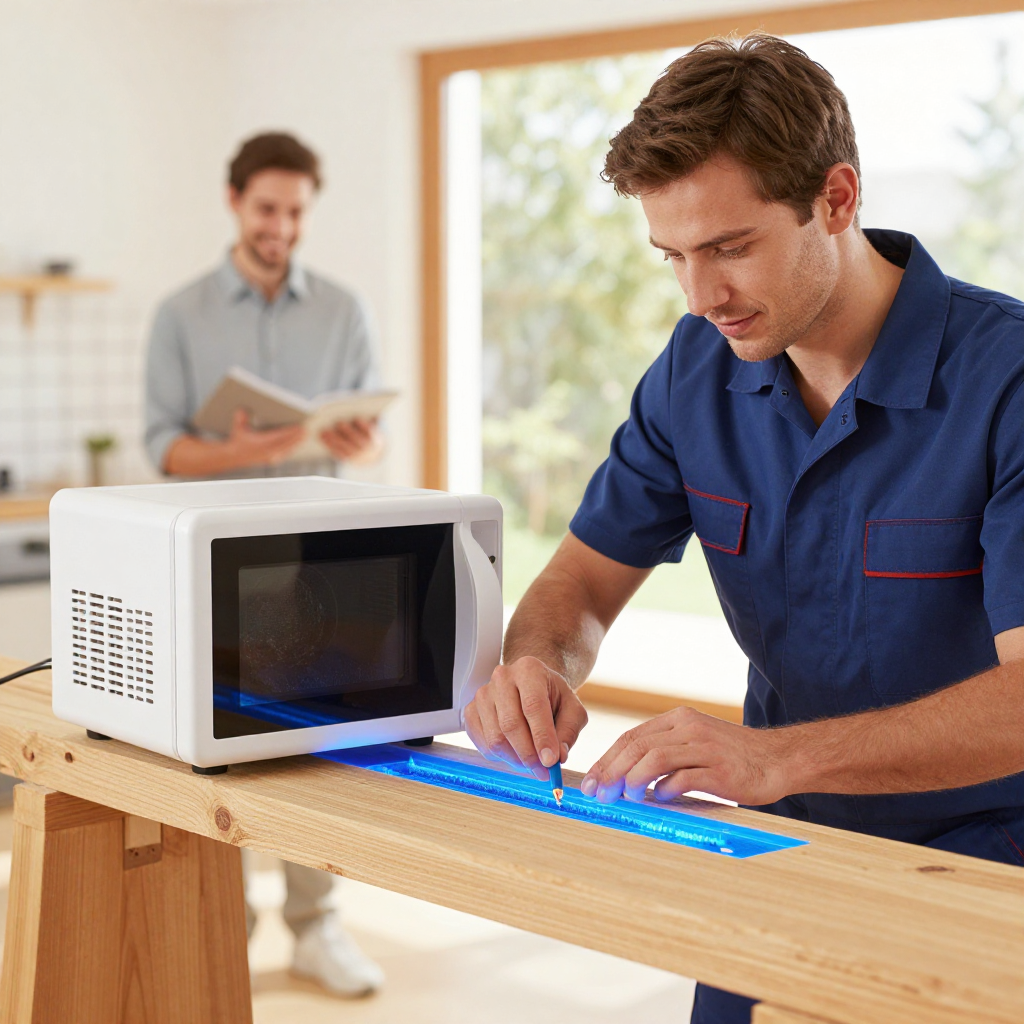
When investing in professional woodworm treatment technology, performance is only part of the equation. Homeowners, pest control companies, restoration specialists, and conservation professionals also want confidence that the equipment they use is designed with safety, engineering quality, and scientific principles in mind.
Modern microwave woodworm treatment is built on decades of research into electromagnetic energy, material science, and pest control. Rather than relying on chemical pesticides, it uses carefully controlled non-ionizing microwave energy to eliminate wood-boring insects hidden inside timber. Shashel combines these established scientific principles with professionally engineered equipment designed for effective and reliable wood preservation.
Why Standards Matter
Professional equipment should do more than simply perform its intended task.
Users also expect technology that emphasizes:
- Reliable operation
- Consistent performance
- Safe system design
- Durable construction
- Professional engineering
- Compliance with applicable requirements in the markets where it is used
Meeting recognized technical and safety standards helps build confidence among professionals who depend on specialized equipment every day.
Built on Proven Scientific Principles
Microwave woodworm treatment is not an experimental concept.
Its operation is based on well-understood principles of physics.
The technology uses non-ionizing microwave energy, which differs fundamentally from ionizing radiation such as X-rays or gamma rays.
When microwave energy passes through timber, it interacts primarily with moisture.
Because wood-boring insects contain significantly more moisture than seasoned wood, they absorb the energy more efficiently. Their internal temperature rises until it reaches a level that they cannot survive.
This process can affect:
- Eggs
- Larvae
- Pupae
- Adult beetles present within the treated area
The treatment relies on controlled heating rather than chemical toxicity.
Engineered for Professional Use
Professional pest control and restoration projects require equipment capable of performing consistently under demanding conditions.
Modern Shashel systems are designed with professional applications in mind, including work in:
- Residential homes
- Commercial buildings
- Historic properties
- Museums
- Churches
- Timber-framed structures
- Restoration projects
Professional engineering helps ensure that equipment can be used effectively across a wide variety of timber preservation tasks.
The Importance of Safety
Any professional treatment technology must place safety at the forefront.
Microwave systems are designed to operate using controlled treatment procedures that include appropriate equipment setup, operator guidance, and planned application.
Professional users are trained to evaluate factors such as:
- Timber dimensions
- Moisture conditions
- Accessibility
- Building construction
- Nearby materials
- Treatment objectives
Careful planning allows each treatment to be adapted to the specific project.
Supporting Quality Through Design
High-quality equipment is the result of thoughtful engineering.
Professional microwave systems typically focus on characteristics such as:
- Robust construction
- Reliable components
- Consistent energy delivery
- Precision controls
- Ease of operation
- Long service life
These design priorities help professionals perform treatments efficiently while maintaining confidence in the equipment.
A Chemical-Free Approach Backed by Science
One reason microwave technology continues to gain attention is that it eliminates active wood-boring insects without relying on conventional pesticides.
Instead of applying insecticides to the timber, Shashel uses controlled microwave energy to target pests inside the wood.
This offers several advantages:
- No chemical pesticides
- No toxic fumigants
- No chemical residues
- Reduced environmental impact
- Targeted treatment of affected timber
For many property owners, this represents an important advancement in sustainable wood preservation.
Supporting Heritage Conservation
Historic buildings often contain timber that has survived for centuries.
Examples include:
- Churches
- Museums
- Castles
- Historic homes
- Libraries
- Heritage hotels
- Traditional timber-framed buildings
Conservation professionals seek treatment methods that preserve as much original material as possible.
Because microwave treatment does not rely on coating valuable timber with pesticides, it complements restoration strategies that prioritize conservation and minimal intervention.
Innovation Meets Practical Experience
Scientific principles alone are not enough to create effective professional equipment.
Successful technology also depends on practical experience gained through real-world applications.
By combining engineering expertise with field experience, Shashel continues to refine microwave systems that meet the needs of:
- Pest control companies
- Building restoration specialists
- Heritage conservation professionals
- Property maintenance teams
- Homeowners
This balance between research and practical application supports dependable performance across many different environments.
The Role of Training
Even the most advanced equipment performs best when used correctly.
Professional microwave treatment includes careful assessment before work begins.
Technicians evaluate:
- The extent of the infestation
- The type of timber
- Structural characteristics
- Accessibility
- Moisture conditions
- The most appropriate treatment strategy
This preparation helps ensure that the treatment is carried out effectively and responsibly.
Looking Toward the Future
Wood preservation continues to evolve as new technologies become available.
Future developments are expected to focus on:
- Greater precision
- Improved efficiency
- Enhanced sustainability
- Better preservation of original timber
- Reduced reliance on chemical pesticides
Microwave technology already reflects many of these goals by combining established scientific principles with modern engineering.
Through ongoing innovation, Shashel continues to contribute to the future of environmentally responsible woodworm control.
Choosing Technology You Can Trust
When selecting professional wood preservation equipment, buyers should consider more than treatment effectiveness alone.
Important factors include:
- Engineering quality
- Safety-focused design
- Reliable performance
- Professional support
- Scientific operating principles
- Suitability for the intended application
Technology built on recognized scientific concepts and responsible engineering provides greater confidence for professionals working to protect valuable timber.
Conclusion
Effective woodworm treatment depends on more than eliminating insects—it requires technology built on sound science, careful engineering, and professional standards. Microwave treatment achieves this by using controlled non-ionizing electromagnetic energy to target wood-boring insects hidden inside timber without relying on chemical pesticides.